Showing posts with label Growing and Marketing Ginseng Goldenseal and Other Woodland Medicinals. Show all posts

Sunday, October 11, 2020

Planting Season-Time to Buy the Book!


Stack of the book "Growing and Marketing Ginseng, Goldenseal and Other Woodland Medicinals"

It's time to plant! I suggest you order the book through the publisher, New Society Publishers, or your favorite local book store; that way the authors can receive their full royalties. It is available in bookstores where native plant gardening is popular. You can order the book through all the big on-line discount book sellers. Many sellers offer the book on Ebay. The book is also available as an ebook through Amazon, Barnes and Noble, New Society Publishers, and elsewhere.

The book is a high-quality soft cover book with 508 pages. It has a center color photo section and black and white photos throughout. Here is detailed information about the book and a link to the table of contents.

Friday, March 15, 2019

Our Tiny Farm Goes International!

Two jars of honey
We aren't really doing international sales, but a customer bought a box of jars of our honey yesterday to take to Korea as gifts! Thought that was pretty cool!
Two donkeys
Chester (on the left) and Meadow (on the right) are enjoying the mild weather and sunshine we have had lately. Little do they know that in a few short weeks, they will have two more donkey companions. Glen and I are looking forward to having more donkeys on the farm.
Daffodils blooming
Daffodils are blooming on the farm. This is my favorite time of the year with buds bursting, grass turning green, and peepers peeping at night. It's a good time to plant that woodland garden you have been thinking about all winter. My book on how to do just that is available through online and local bookstores.
page from Growing and Marketing Ginseng, Goldenseal and Other Woodland Medicinals book


Thursday, September 20, 2018

Heading into Fall on Our Tiny Farm

Five donkeys in the pasture
Currently we have five donkeys on Our Tiny Farm. Two of them, Chester and Meadow, are ours. The other three are visitors.  We have Faith, the mother,  Hope,  her yearling daughter,  and Corey Love, her son who was born just a few months ago. They make for a very happy,  and entertaining little herd.
Black steer under a tree
We have Black Angus steer on the farm again. These two aren't ours. They belong to a friend,  but I missed having the big boys on the pasture so we are happy to give them a home.
Vegetable garden
We grew a small garden this year, mostly for the family. We have enjoyed delicious summer squash, lots of tomatoes, a wide variety of peppers, eggplant, sweet corn, and peas.
Square bales of hay
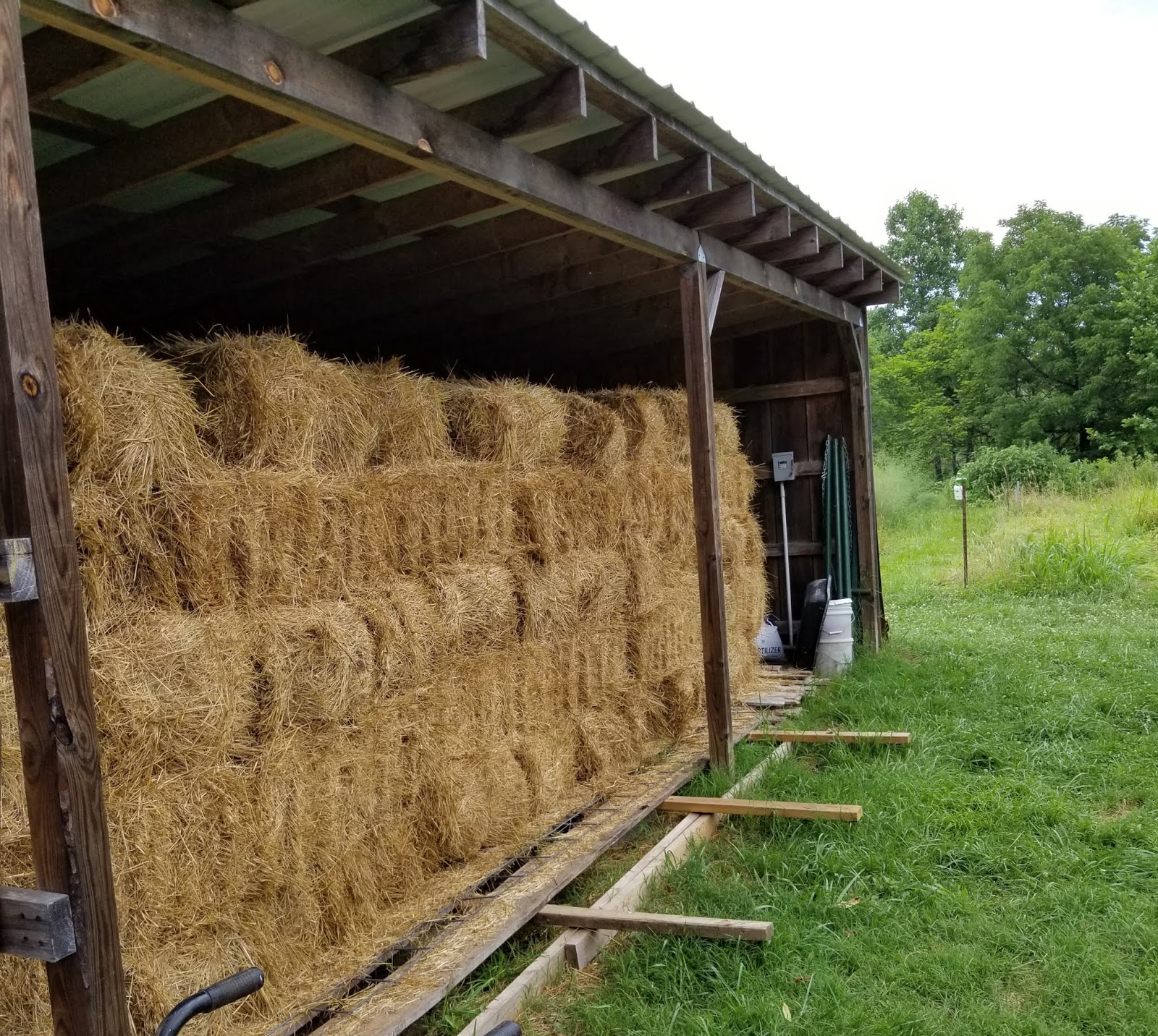
In late June,  for the first time, we had hay from our pasture cut and baled. We are very pleased with the quality and it will make for a good savings for us this winter. We plan to do a second cutting in October.
Woman holding a freshly dug garlic bulb
In May we received about 21 inches of rain in a two to three week period. This was bad timing for our garlic crops. We lost all of the elephant garlic. The hard necked garlics survived but the bulbs are small. We cured them and they taste good,  but because their quality is not what we like to provide to others.
Beekeeper working a hive
We did have a great honey crop this year. Most of it was sold at the Obermiller Strawberry Farm nearby during their strawberry and blueberry seasons.
Book
Thanks for checking in with Our Tiny Farm. And as always, you can buy a copy of my book at local and online book sellers.  Thanks! Jeanine

Tuesday, January 17, 2017

It has been very busy for the past six months on Our Tiny Farm!

I have certainly been lax at keeping up with the blog, but it is not from lack of activity on the farm! First and foremost, I want to dedicate this post to our dear, late Tennessee Walker horse, Little Man. He was a great friend and companion to us and our donkeys. He was an amazing listener. Always calm and very protective of his little donkey friends. But he was very old. We are not sure exactly, but the vet, farrier, and our neighbor who rode him when he was a boy himself, said he had to be 35 years old at least. The summer of 2016 was very, very hot and as the summer progressed, Little Man found it difficult to breathe. We had to soak him down several times a day and keep fans blowing on him. We trimmed his long, curly coat as often as we could, but it was clear to all of us that he was very uncomfortable. We finally made the decision to say goodbye and send him across the rainbow bridge on a beautiful, golden afternoon in late summer. It was a quiet passing and he is buried in his pasture near his little buddies and where we can be near him when we need to be. Love you, Little Man.
A few weeks later we also had to say goodbye to our dear old cat, Maple. That was just too much death and we had two few animal companions around, so we headed out to the local animal shelter and brought home these two adorable kittens. They are not related. They sure are fun!
We are in the midst of doing some pretty major remodeling on our old farmhouse, and in the process of clearing some things out, we came across a box with the first 18 issues of Mother Earth News magazine! I thought that was so cool. We live in the same community where Mother Earth News started and we always thought of our place as a little Mother Earth News type farm.
And then the forest fires came. I don't want anyone to forget how much of western North Carolina and eastern Tennessee burned in November 2016. It was terrifying. We were miles from the fires but they still had a big impact on our lives.
But then every now and then, the direction of the wind would change and we would experience the most beautiful, sunny late November afternoons.
The Sustainable Agriculture Conference took place in November in Durham, NC. There I got to spend time at a book signing with my good friend and fellow author, Ira Wallace, of Southern Exposure Seed Exchange.
A lot went on in our personal lives, too. There was a wedding with the dinner on the farm (I now have a grandson!). The house was full of good smells with all the baking for Thanksgiving and Christmas. And the New Year was rung in with a fun movie and several bottles of champagne.
2017 started out with a beautiful blanket of snow. I took that as a good omen of the year ahead. This year will be one of change on Our Tiny Farm. We don't know what that all means yet, but with the young adult children making their own lives and our desire to try new things, we are spending the winter rethinking what we will do on the farm. We will continue to raise bees and bottle honey, and a good crop of garlic and shallots has been planted. But we don't know what livestock we are going to raise and I would love to have a bunch more little donkeys! But, that will all be decided this winter as we sit in front of the woodstove sipping hot chocolate and planning it all out.
In the meantime, we still have honey and it is about time for sales on my book on growing ginseng, goldenseal and other woodland medicinals to pick up. If you are serious about growing woodland medicinal herbs, whether for a business or your own personal enjoyment, this is the book to have. Written by two well-know authorities, the book is chock full of information and hundreds of pictures on how to grow ginseng, goldenseal, ramps, black cohosh, and many other native herbs.

How to Get a Copy of the Book: We suggest you order the book through the publisher, New Society Publishers, or your favorite local book store; that way the authors can receive their full royalties. It is available in bookstores where native plant gardening is popular. You can order the book through all the big on-line discount book sellers. Many sellers offer the book on Ebay. The book is also available as an ebook through Amazon, Barnes and Noble, New Society Publishers, and elsewhere.

Happy New Year from the Davis family at Our Tiny Farm.

Saturday, November 28, 2015

Wild-simulated ginseng: sowing your seeds and applying gypsum

stratified ginseng seed
Picking up from my last post, let's assume you have your wild-simulated ginseng site all prepared. You are now ready to plant the high-quality, stratified seed that you have purchased or stratified yourself. But how much should you sow? Let's refer to what Scott Persons says in our book Growing and Marketing Ginseng, Goldenseal and Other Woodland Medicinals:

"From my own experience and that of other growers, I am convinced that at least one, but no more than two, mature plants per square foot is best. Anything denser courts disaster by facilitating the spread of disease. Anything thinner does not optimize the financial potential of the operation, though I'd certainly recommend erring on the side of caution."

To get this density, you need to plant four to eight seeds per square foot. Why so many? Because even with the best of seeds, you can expect to lose a large percentage of your seeds to birds, insects, rodents, poor soil contact, drying out, being washed away, etc. During the first few years of growth you will lose even more to the same causes and to winter kill, being crushed underfoot, being covered too deeply with leaves and branches, and to other causes I can't even think of right now. By the time the plants are three to four years old, you should have just about the right density.

Scott estimates that there are 6,400 to 8,000 seeds per pound, or between 400 and 500 in an ounce. So, according to Scott's calculations "if you sow one ounce of seed on 100 square feet of land or, as I prefer, two ounces (between 800 and 1,000 seeds) on 200 square feet, you can achieve an average planting density of between four and five seeds per square feet, or about 25 pounds of seed to the acre."

Scott is a very practical and well-organized person. He plans his seeding trips out carefully so he can be quick and efficient when he reaches his planting site.
wild-simulated ginseng seed sowing
"Just before going into the woods to plant, weigh out your seeds into multiple plastic bags and place them in a small cooler, or at least a covered bucket."  If you prepared 200 square foot sections, weigh out 2 ounces per bag. Using one bag per section, you will have a final sowing rate of one ounce of seed per 100 square feet. Scatter the seeds to the left and right of you as you walk slowly over your section. After the first few times, you will get a good feel for how to get the seed spread evenly over the section.
gypsum on ginseng seed bed area
In another post, we will talk about gypsum (or you can read about it for yourself on pages 64-65 in the book), but for now let's assume that you have decided to apply 10 lbs of gypsum on your 200 square foot section of planting area. Scatter it evenly over the planted area. I just put the weighed out gypsum in a small bucket and scatter it by hand. Some people use a small hand cranked fertilizer spreader.
replacing leaves on wild-simulated ginseng planted area

Then, and this is the slick part of this method, "stand on the strip that you've just sown, reach straight uphill with your rake, and, again using the five-foot mark on the rake handle as a guide, rake down the next five feet of leaf litter directly onto the stip you've just seeded." In this way you are mulching (covering up) the area you just planted while at the same time, uncovering the next area to be planted. Sow seed and gypsum on that new section, and then pull down another five foot swath of leaves to mulch that area and expose a new planting area.  "Note that you have not moved any leaves more than once, and with the exceptions of the bottom and top sections, every rake stroke has accomplished two tasks." On steep slopes, you might want to lay limbs and small branches on top of the leaves to hold the mulch in place. 

If you are serious about growing woodland medicinal herbs, whether for a business or your own personal enjoyment, this is the book to have. Written by two well-know authorities, the book is chock full of information and hundreds of pictures on how to grow ginseng, goldenseal, ramps, black cohosh, and many other native herbs.

How to Get a Copy of the Book: We suggest you order the book through the publisher, New Society Publishers, or your favorite local book store; that way the authors can receive their full royalties. It is available in bookstores where native plant gardening is popular. You can order the book through all the big on-line discount book sellers. Many sellers offer the book on Ebay. The book is also available as an ebook through Amazon, Barnes and Noble, New Society Publishers, and elsewhere.

The book is a high-quality soft cover book with 508 pages. It has a center color photo section and black and white photos throughout. Here is detailed information about the book and a link to the table of contents.

Tuesday, September 1, 2015

Special Pricing on Three Year Old Ginseng Rootlets and THE Book on How to Grow Them


Photo from High Valley Ginseng Website

WE ARE SOLD OUT OF THIS SPECIAL OFFER FOR THE SEASON. THE BOOK IS AVAILABLE FOR SALE THROUGH LOCAL BOOKSELLERS
High Valley Ginseng has sold out of one year old rootlets, so we are making a new special offer that includes THREE-YEAR-OLD GINSENG ROOTLETS:

High Valley Ginseng and Our Tiny Farm have come together to make you a special offer of 10 three-year-old ginseng rootlets AND a copy of the book Growing and Marketing Ginseng, Goldenseal & Other Woodland Botanicals for just $58.00. That saves you $4.67 compared to buying the products from the individual websites. The book alone goes for $39.95 in the bookstore, so this is a great deal. ROOTLET PLUS BOOK SALE OVER AS OF 11/3/2015.
 
The book will be signed and dated by the lead author, Jeanine Davis. It will be shipped directly from the author at Our Tiny Farm in Etowah, NC via media mail within one business day of receiving the order.

The three year old ginseng roots will be shipped directly to you from High Valley Ginseng in Suches, GA via priority mail. To learn more about High Valley Ginseng, check out their Facebook page or Website.

To provide the best quality and service, the ginseng rootlets and book will be shipped separately from each business. High Valley Ginseng suggests you have the plants delivered to where you can be sure to pick them up right away so they don't lose quality from staying in the packaging too long.

Each company retains responsibility for their own products and any questions or concerns should be directed to the relevant company.

This is a limited time offer and will be discontinued when High Valley Ginseng can no longer ship rootlets.

Saturday, February 14, 2015

The Ginseng Life Cycle: From Two Years Old to Mature Plants with Berries

                                                  Two year old ginseng plants
In our book, Growing and Marketing Ginseng, Goldenseal and Other Woodland Medicinals (2014), Scott Persons describes how the ginseng plant develops from two years of age on:
     "In its second year, under optimal growing conditions, the plant can reach five or more inches in height and produce two prongs branching from the central stem, each prong being a single leaf composed of three to five leaflets. If conditions are friendly and fertile, the number of prongs will increase with age, and the plant may eventually reach a height exceeding two feet. In cultivated shade gardens, ginseng typically produces three prongs in its third growing season and often four prongs in its fourth. However, in the wild, plants are usually five to nine years old before they add a third prong and begin to produce berries (with seeds) in any quantity. In later years, particularly healthy and vigorous specimens can have as many as five prongs radiating from the top of the stem, with each prong typically having five leaflets (occasionally as many as eight).
                                Four-prong ginseng plant
     "The species name, quinquefolius, means five-leafed. The two smallest leaflets on a prong are less than two inches long and the other three larger leaflets are three or four inches in length. The shape of the leaflets is lanceolate, with saw-toothed edges ending in a sharp point.
                                                                  Ginseng berry cluster    
"From the center of the whorl of prongs, a delicate cluster of small, nondescript blossoms arises in early summer, usually on plants that are at least three years old. Each blossom has five greenish white petals only a few millimeters in width. A ginseng plant is capable of self-pollination, but reproductive success is greater when sweat bees and other insects cross-pollinate the flower clusters. By July or August, as few as two or three green berries or (on large, older plants) as many as 50 berries follow the blossoms. These kidney-shaped berries about the size of bloated black-eyed peas turn a beautiful   bright crimson color as they ripen. Each ripe berry usually contains two slightly wrinkled, hard whitish seeds about the size and shape of a children's aspirin tablet. Young plants sometimes produce berries containing only one seed, and vigorous older plants often have berries with three seeds in them. Under normal conditions, the seeds do not germinate and sprout until 18 to 20 months after they fall from the plant in August or September."

If you are serious about growing woodland medicinal herbs, whether for a business or your own personal enjoyment, this is the book to have. Written by two well-know authorities, the book is chock full of information and hundreds of pictures on how to grow ginseng, goldenseal, ramps, black cohosh, and many other native herbs.

How to Get a Copy of the Book: We suggest you order the book through the publisher, New Society Publishers, or your favorite local book store; that way the authors can receive their full royalties. It is available in bookstores where native plant gardening is popular. You can order the book through all the big on-line discount book sellers. Many sellers offer the book on Ebay. The book is also available as an ebook through Amazon, Barnes and Noble, New Society Publishers, and elsewhere.

The book is a high-quality soft cover book with 508 pages. It has a center color photo section and black and white photos throughout. Here is detailed information about the book and a link to the table of contents.

Saturday, January 24, 2015

Ginseng Expert, Scott Persons, Explains Why and How to Grow Ginseng

i
Photo from Accem Scott's video (link provided in text below)
Scott Persons is my coauthor for the book Growing and Marketing Ginseng, Goldenseal and Other Woodland Medicinals. He is the undisputed expert on growing wild-simulated ginseng and his books on the topic are treasured by ginseng growers around the world. For those of you who are new to growing ginseng, I thought you might be interested in reading the beginning of the American Ginseng section of our latest book where Scott introduces you to the section and provides a little advice for future growers to heed (from pages 3 and 5 of the 2014 edition):
     "For 33 years now, I have grown American ginseng (Panax quinquefolius) in the woods not 30 yards from my front door. It allows me a healthy, comfortable, low-stress life that is a treasure to find in our hectic culture. An individual can cultivate a forest garden of this revered herb just to have the fascinating plant around or for his (or her) own consumption, but ginseng also has great potential as a small-scale cash crop with a ready market. With little capital investment, the small farmer can net a greater profit growing ginseng on a rugged, otherwise idle, woodlot than he can net raising just about any other legal crop on an equal area of cleared land. Of course, you have to be willing to bend your back and get your hands dirty, and to take a risk and persevere when the payoff is years in the future [Author's note: A non-commercial home gardening approach to growing ginseng is discussed in chapter 32, but the home gardener will certainly learn from the material covered in the first half of this book].
     "To guide the reader in growing ginseng, I have drawn from my own hands-on experience, from discussions with other experienced growers and agriculture professionals, and from my own observations of ginseng operations throughout the United States, Canada, and Australia."
     "As this revised edition of Growing & Marketing Ginseng, Goldenseal & Other Woodland Medicinals is about to go to press, the prices being paid for wild ginseng are higher than ever before. While this certainly makes woodland ginseng growing even more attractive, should roots continue to bring such high value in the future, wild populations could be threatened by overharvesting, and the United States Fish and Wildlife Service might well feel compelled to prohibit the export of wild ginseng in order to protect the plant. Growers are therefore advised to proactively document their purchases of planting stock and their growing operation in order to be able to prove that their roots were not foraged from wild populations. Increased production of high-grade roots by woodland growers is the best way to keep supply in balance with demand, thereby keeping prices down and protecting the still widespread populations of wild ginseng." 

The picture at the top of this post was taken from a video of an interview of Scott Persons by Accem Scott. I think you might find it interesting: Link to Video

If you are serious about growing woodland medicinal herbs, whether for a business or your own personal enjoyment, this is the book to have. Written by two well-know authorities, the book is chock full of information and hundreds of pictures on how to grow ginseng, goldenseal, ramps, black cohosh, and many other native herbs.

How to Get a Copy of the Book: We suggest you order the book through the publisher, New Society Publishers, or your favorite local book store; that way the authors can receive their full royalties. It is available in bookstores where native plant gardening is popular. You can order the book through all the big on-line discount book sellers. Many sellers offer the book on Ebay. The book is also available as an ebook through Amazon, Barnes and Noble, New Society Publishers, and elsewhere.

The book is a high-quality soft cover book with 508 pages. It has a center color photo section and black and white photos throughout. Here is detailed information about the book and a link to the table of contents.