Showing posts with label ginseng. Show all posts

Friday, September 15, 2017

Ginseng Book Available in Time for the Planting Season

If you are serious about growing woodland medicinal herbs, whether for a business or your own personal enjoyment, this is the book to have. Written by two well-know authorities, the book is chock full of information and hundreds of pictures on how to grow ginseng, goldenseal, ramps, black cohosh, and many other native herbs.

How to Get a Copy of the Book: We suggest you order the book through the publisher, New Society Publishers, or your favorite local book store; that way the authors can receive their full royalties. It is available in bookstores where native plant gardening is popular. You can order the book through all the big on-line discount book sellers. Many sellers offer the book on Ebay. The book is also available as an ebook through Amazon, Barnes and Noble, New Society Publishers, and elsewhere.

The book is a high-quality soft cover book with 508 pages. It has a center color photo section and black and white photos throughout. Here is detailed information about the book and a link to the table of contents.


Tuesday, January 17, 2017

It has been very busy for the past six months on Our Tiny Farm!

I have certainly been lax at keeping up with the blog, but it is not from lack of activity on the farm! First and foremost, I want to dedicate this post to our dear, late Tennessee Walker horse, Little Man. He was a great friend and companion to us and our donkeys. He was an amazing listener. Always calm and very protective of his little donkey friends. But he was very old. We are not sure exactly, but the vet, farrier, and our neighbor who rode him when he was a boy himself, said he had to be 35 years old at least. The summer of 2016 was very, very hot and as the summer progressed, Little Man found it difficult to breathe. We had to soak him down several times a day and keep fans blowing on him. We trimmed his long, curly coat as often as we could, but it was clear to all of us that he was very uncomfortable. We finally made the decision to say goodbye and send him across the rainbow bridge on a beautiful, golden afternoon in late summer. It was a quiet passing and he is buried in his pasture near his little buddies and where we can be near him when we need to be. Love you, Little Man.
A few weeks later we also had to say goodbye to our dear old cat, Maple. That was just too much death and we had two few animal companions around, so we headed out to the local animal shelter and brought home these two adorable kittens. They are not related. They sure are fun!
We are in the midst of doing some pretty major remodeling on our old farmhouse, and in the process of clearing some things out, we came across a box with the first 18 issues of Mother Earth News magazine! I thought that was so cool. We live in the same community where Mother Earth News started and we always thought of our place as a little Mother Earth News type farm.
And then the forest fires came. I don't want anyone to forget how much of western North Carolina and eastern Tennessee burned in November 2016. It was terrifying. We were miles from the fires but they still had a big impact on our lives.
But then every now and then, the direction of the wind would change and we would experience the most beautiful, sunny late November afternoons.
The Sustainable Agriculture Conference took place in November in Durham, NC. There I got to spend time at a book signing with my good friend and fellow author, Ira Wallace, of Southern Exposure Seed Exchange.
A lot went on in our personal lives, too. There was a wedding with the dinner on the farm (I now have a grandson!). The house was full of good smells with all the baking for Thanksgiving and Christmas. And the New Year was rung in with a fun movie and several bottles of champagne.
2017 started out with a beautiful blanket of snow. I took that as a good omen of the year ahead. This year will be one of change on Our Tiny Farm. We don't know what that all means yet, but with the young adult children making their own lives and our desire to try new things, we are spending the winter rethinking what we will do on the farm. We will continue to raise bees and bottle honey, and a good crop of garlic and shallots has been planted. But we don't know what livestock we are going to raise and I would love to have a bunch more little donkeys! But, that will all be decided this winter as we sit in front of the woodstove sipping hot chocolate and planning it all out.
In the meantime, we still have honey and it is about time for sales on my book on growing ginseng, goldenseal and other woodland medicinals to pick up. If you are serious about growing woodland medicinal herbs, whether for a business or your own personal enjoyment, this is the book to have. Written by two well-know authorities, the book is chock full of information and hundreds of pictures on how to grow ginseng, goldenseal, ramps, black cohosh, and many other native herbs.

How to Get a Copy of the Book: We suggest you order the book through the publisher, New Society Publishers, or your favorite local book store; that way the authors can receive their full royalties. It is available in bookstores where native plant gardening is popular. You can order the book through all the big on-line discount book sellers. Many sellers offer the book on Ebay. The book is also available as an ebook through Amazon, Barnes and Noble, New Society Publishers, and elsewhere.

Happy New Year from the Davis family at Our Tiny Farm.

Friday, September 2, 2016

I Want to See You at the Heritage Harvest Festival at Monticello!

I plan to inspire you to grow some new plants and fungi in your gardens! So join me at my workshop called Unusual Edible Plants and Fungi for Home Gardens on Saturday, September 10 at the Heritage Harvest Festival at Monticello in Charlottesville, VA.
I have a colorful presentation prepared to introduce you to a wide range of plants and fungi, including hops! Yes, you can grow hops in your home garden and I will tell you how.
You will get to see, touch, and sample some of these items, too!
I suggest that you order your tickets on-line. This workshop is a premium workshop so you have to order (and pay for) that workshop ticket, too. Consider buying a VIP ticket! There are many workshops, great speakers, book signings, food, music... It is great fun, I promise!
Here are links to the Festival website, my Unusual Plants & Fungi page, and the page for my other workshop on Growing Ginseng and Other Woodland Herbs.

Saturday, July 30, 2016

Who to take advice from on growing ginseng, or any crop, for that matter

The ginseng berries are ripening and that means it is about time to reserve seeds for your own ginseng gardens. Every year there are more and more people selling ginseng seeds and giving out advice on how to grow this very special plant. I have no doubt that some of these people are quite knowledgeable, but before taking advice from folks, be sure to check their credentials. They might not be quite as "expert" as you would like them to be.

Let me give you an example. Earlier this summer I was at a book signing sitting next to the author of a new book on another crop that I work with (I am going to protect her identity and not share what that crop is). It was a beautiful book with great photographs and an impressive layout. The author was very enthusiastic about the crop but as we got deeper into our discussion about it I was puzzled at some of the questions she couldn't answer. So I asked her how long she had been growing the crop, and she said two years. She had a total of two years of experience growing this crop and she wrote a book about it and was promoting herself on the speaking circuit as an expert! I was shocked to say the least.

The lesson is, anyone can call themselves an expert and anyone can write a book. So, before you go taking advice from someone on a crop as long-lived and valuable as ginseng, check them out. What is their background with ginseng? How long have they been growing it? Is there evidence to support their claims? What is their reputation? Do they have a website or a blog? How long have they been posting about it?
The same goes for ginseng seeds. Where did they come from? What region of the country are they from? Are they from artificial shade gardens or plants that grew in the woods? How were the seeds handled? Who stratified them? How have they been stored? Do they come with planting instructions? What is the expected germination percentage? What if none of them come up? Will you get a credit or a refund? Will the seller answer any questions you might have now, in a few weeks, or in a few months?

There are folks selling ginseng seed who have never grown or wild-harvested a ginseng plant in their life. They find a great deal on some ginseng seed "seconds" from a large producer somewhere, break it up into hundreds of packages, and sell them online. Many of these packages are bought by home gardeners who are thrilled if a few seeds germinate. But if you are a serious grower, you want a high germination rate and confidence that the seed are disease free and are the genus and species you ordered.
Here is an example of the kind of person I suggest you seek out for advice. My coauthor, Scott Persons, has been growing ginseng since 1979. He has supported his family all these years from his ginseng business. His seeds are shipped all over the world, he is considered by many to be the father of the wild-simulated ginseng growing method, and he is a popular speaker and consultant to growers in many countries. His first book, American Ginseng: Green Gold is a classic and highly prized by people who own an author signed copy. Without hesitation, I can say that few people know as much about ginseng as Scott Persons. Those are the kinds of credentials you should be looking for.

The Extension Service, university ginseng researchers, native plant and herb focused non-profits can also be great sources of information on how to grow ginseng. But they vary in their level and quality of expertise, too. Once in awhile I find a very authoratative looking ginseng bulletin online that was clearly written by someone who had never grown the plant before. They cut and pasted information from a variety of sources that they weren't qualified to evaluate. So even there, take a few minutes to look up the authors and see if they have grown ginseng in test plots or on-farm studies, or at least worked with ginseng growers for many years.

So, as we head into ginseng planting season and you start looking for seeds and someone to get growing advice from, take the time to check people out. Be suspicious if someone is selling seeds for much less than everyone else. And watch for those who advertise that you will make hundreds of thousands of dollars if you follow their advice, which they will gladly bill your credit card for.

I hope you all do plant some ginseng seeds this fall. Plant some for yourself to harvest in the future and some to give back to forest. Happy ginseng growing!!


Saturday, November 28, 2015

Wild-simulated ginseng: sowing your seeds and applying gypsum

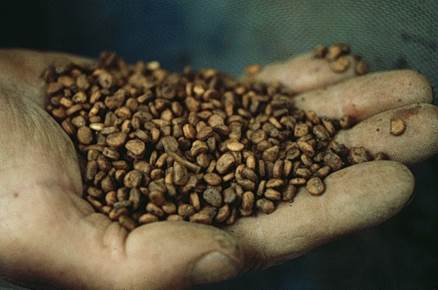
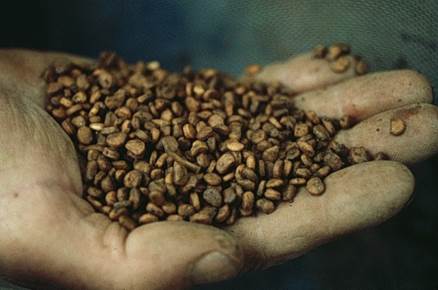
stratified ginseng seed
Picking up from my last post, let's assume you have your wild-simulated ginseng site all prepared. You are now ready to plant the high-quality, stratified seed that you have purchased or stratified yourself. But how much should you sow? Let's refer to what Scott Persons says in our book Growing and Marketing Ginseng, Goldenseal and Other Woodland Medicinals:

"From my own experience and that of other growers, I am convinced that at least one, but no more than two, mature plants per square foot is best. Anything denser courts disaster by facilitating the spread of disease. Anything thinner does not optimize the financial potential of the operation, though I'd certainly recommend erring on the side of caution."

To get this density, you need to plant four to eight seeds per square foot. Why so many? Because even with the best of seeds, you can expect to lose a large percentage of your seeds to birds, insects, rodents, poor soil contact, drying out, being washed away, etc. During the first few years of growth you will lose even more to the same causes and to winter kill, being crushed underfoot, being covered too deeply with leaves and branches, and to other causes I can't even think of right now. By the time the plants are three to four years old, you should have just about the right density.

Scott estimates that there are 6,400 to 8,000 seeds per pound, or between 400 and 500 in an ounce. So, according to Scott's calculations "if you sow one ounce of seed on 100 square feet of land or, as I prefer, two ounces (between 800 and 1,000 seeds) on 200 square feet, you can achieve an average planting density of between four and five seeds per square feet, or about 25 pounds of seed to the acre."

Scott is a very practical and well-organized person. He plans his seeding trips out carefully so he can be quick and efficient when he reaches his planting site.
wild-simulated ginseng seed sowing
"Just before going into the woods to plant, weigh out your seeds into multiple plastic bags and place them in a small cooler, or at least a covered bucket."  If you prepared 200 square foot sections, weigh out 2 ounces per bag. Using one bag per section, you will have a final sowing rate of one ounce of seed per 100 square feet. Scatter the seeds to the left and right of you as you walk slowly over your section. After the first few times, you will get a good feel for how to get the seed spread evenly over the section.
gypsum on ginseng seed bed area
In another post, we will talk about gypsum (or you can read about it for yourself on pages 64-65 in the book), but for now let's assume that you have decided to apply 10 lbs of gypsum on your 200 square foot section of planting area. Scatter it evenly over the planted area. I just put the weighed out gypsum in a small bucket and scatter it by hand. Some people use a small hand cranked fertilizer spreader.
replacing leaves on wild-simulated ginseng planted area

Then, and this is the slick part of this method, "stand on the strip that you've just sown, reach straight uphill with your rake, and, again using the five-foot mark on the rake handle as a guide, rake down the next five feet of leaf litter directly onto the stip you've just seeded." In this way you are mulching (covering up) the area you just planted while at the same time, uncovering the next area to be planted. Sow seed and gypsum on that new section, and then pull down another five foot swath of leaves to mulch that area and expose a new planting area.  "Note that you have not moved any leaves more than once, and with the exceptions of the bottom and top sections, every rake stroke has accomplished two tasks." On steep slopes, you might want to lay limbs and small branches on top of the leaves to hold the mulch in place. 

If you are serious about growing woodland medicinal herbs, whether for a business or your own personal enjoyment, this is the book to have. Written by two well-know authorities, the book is chock full of information and hundreds of pictures on how to grow ginseng, goldenseal, ramps, black cohosh, and many other native herbs.

How to Get a Copy of the Book: We suggest you order the book through the publisher, New Society Publishers, or your favorite local book store; that way the authors can receive their full royalties. It is available in bookstores where native plant gardening is popular. You can order the book through all the big on-line discount book sellers. Many sellers offer the book on Ebay. The book is also available as an ebook through Amazon, Barnes and Noble, New Society Publishers, and elsewhere.

The book is a high-quality soft cover book with 508 pages. It has a center color photo section and black and white photos throughout. Here is detailed information about the book and a link to the table of contents.

Sunday, November 22, 2015

Growing Wild-Simulated Ginseng: Preparing the Planting Site

 
I am so pleased at how many people are buying ginseng seed this year to start their own wild-simulated ginseng patches. That is wonderful news! They are creating their own income producing areas and helping to conserve the wild populations.

But so many of these people don't know how to grow wild-simulated ginseng. Today's short lesson will be on preparing the site. I am going to assume that you have already selected the perfect site for your ginseng. You have your high-quality, stratified seed on hand, and you are ready to plant. Reading from Scott Person's section on Wild-Simulated Planting in our book Growing and Marketing Ginseng, Goldenseal and Other Woodland Medicinals:

"Before you plant, you need to rake aside the leaf litter, and it is difficult to rake efficiently where there are dead limbs and rocks lying around or lots of small saplings, vines, and shrubs growing. Even if you cast seeds on top of the leaf litter and then till them into the top inch or two of ground-an approach that some growers swear by-you'll need to clean and clear to make space for the tiller to operate."

Scott goes on to describe exactly how to do this, what to remove and what is better left behind, and how to prevent erosion on slopes.
Scott also describes how to mark off your planting area so you have some control over planting density:

"I like to plant 40' wide sections (or only 20' wide, if 40' isn't practical), beginning at the lowest part of the planting site and moving directly up the face of the slope to the top of the site. Then I go back to the bottom and plant an adjacent and parallel section and so on, until the entire area is sown."

He goes on to describe exactly how to do this and the pros and cons of using small wooden stakes, surveyor's flags or heavy-duty surveyor's stakes.
The next step is raking off the leaf litter:

"Take a large rugged leaf rake, measure five feet from the tip of the tines to a spot on the handle, and make a highly visible permanent mark there. Then, start at the bottom of one of your measured sections, face directly uphill, and, using the mark on your rake handle as a guide, rake the first five feet of leaf litter down and off the soil across the entire width of the section."

Scott goes on to describe how to do this up the entire hill and signs of some pesky critters to look for.
This is what your planting area should look like prior to sowing your seed and spreading your gypsum. I'll cover that in a future post.

If you are serious about growing woodland medicinal herbs, whether for a business or your own personal enjoyment, this is the book to have. Written by two well-know authorities, the book is chock full of information and hundreds of pictures on how to grow ginseng, goldenseal, ramps, black cohosh, and many other native herbs.

How to Get a Copy of the Book: We suggest you order the book through the publisher, New Society Publishers, or your favorite local book store; that way the authors can receive their full royalties. It is available in bookstores where native plant gardening is popular. You can order the book through all the big on-line discount book sellers. Many sellers offer the book on Ebay. The book is also available as an ebook through Amazon, Barnes and Noble, New Society Publishers, and elsewhere.

The book is a high-quality soft cover book with 508 pages. It has a center color photo section and black and white photos throughout. Here is detailed information about the book and a link to the table of contents.

Friday, October 16, 2015

Garlic and Ginseng Seed, Rootlets, and Book for Sale at Our Tiny Farm!

This is what we currently have for sale at Our Tiny Farm:
                                                                        SOLD OUT!
Right now we are selling 4 lb boxes of mountain grown, whole bulb garlic. We are selling it as eating garlic but we are using it as planting garlic, too. We have one box of German White garlic and 4 boxes of "reasonably sized" Elephant garlic left. All is firm, healthy, and oh so tasty. Order by clicking on the appropriate Add to Cart button on the right (If you are using your smartphone and don't see those buttons, scroll to the bottom of this page and click on "View Web Version"). More details about the garlic in the previous post (Sept. 29). Later this fall we will be selling packaged cloves, appropriate for gift giving or your own kitchen use.

  SALE OVER AS OF 11/3/2015.
We still have our special with three-year-old ginseng rootlets plus book offer going on. This is for 10 three year old ginseng rootlets from High Valley Ginseng in north Georiga with a lead author (me) signed copy of our book Growing and Marketing Ginseng, Goldenseal and Other Woodland Medicinals. See the post from Sept. 15 for details.
 SALE OVER AS OF 11/21/2015
We also still have our special for ginseng seed plus book offer going on. This is for 2 oz of high quality, water tested, stratified seed from Green Gold Enterprises with a copy of our book Growing and Marketing Ginseng, Goldenseal and Other Woodland Medicinals signed by Scott Persons. See the post from Sept 15 for details. 
  SALE OVER AS OF 11/21/2015 BUT BOOK IS STILL AVAILABLE
Keep checking back for information on when our beef sales will start. The cattle are still on the pasture, but as you can see, they have sized up nicely. We also have donkey and horse manure available for free. It is aged but not composted. This is a good time to get it so you can compost it yourself and have a great weed free soil amendment for next year's gardens.

Tuesday, September 15, 2015

THREE Fall Ginseng Planting Specials!!!

Here are THREE special offers to help you get started growing your own "Green Gold" (that's ginseng, if you haven't guessed it).
THIS SALE IS OVER AS OF 11/3/2015.

Offer #1: 10 three-year-old ginseng rootlets from High Valley Ginseng & Herb Co. in Suches, GA and the book Growing and Marketing Ginseng, Goldenseal and Other Woodland Medicinals signed by the lead author, Jeanine Davis. Both for a total of $58.00 (plus tax in NC). This includes priority mail shipping on the rootlets and media mail shipping on the book. The ginseng rootlets will be shipped directly from the nursery and the book will be shipped in a padded envelope directly from the author. The rootlets will be shipped early in the week so they don’t sit somewhere over the weekend. Please have them shipped where they can be picked up right away because they are living plants.
THIS SALE IS OVER AS OF 11/21/2015
Offer #2: Two ounces of high quality ginseng seed from Green Gold Enterprises and the book Growing and Marketing Ginseng, Goldenseal and Other Woodland Medicinals signed by the second author, Scott Persons. Both for $60.00 (plus tax in NC). Scott will ship the book and seeds together.
 
THIS SALE IS OVER AS OF 11/21/2015. YOU CAN STILL BUY THE BOOK 
Offer #3: The book Growing and Marketing Ginseng, Goldenseal and Other Woodland Medicinals signed by the lead author, Jeanine Davis for $30.00 (plus tax in NC) and shipped in a padded envelope via media mail. This is $3 off my regular website price and $9.95 off the standard bookstore price.

Please note that Johnny Crisson of High Valley Ginseng retains full responsibility for his plants. All questions or concerns about the ginseng rootlets or goldenseal rhizomes should be directed to him through (http://highvalleyginseng.com). Scott Persons of Green Gold Enterprises retains full responsibility for his seeds and the book he ships. All questions or concerns about those should be directed to him at wasp3@frontier.com. Any issues or concerns about the book from Offer #3 should be directed to me by using the private message box on the right sidebar.

Tuesday, September 1, 2015

Special Pricing on Three Year Old Ginseng Rootlets and THE Book on How to Grow Them


Photo from High Valley Ginseng Website

WE ARE SOLD OUT OF THIS SPECIAL OFFER FOR THE SEASON. THE BOOK IS AVAILABLE FOR SALE THROUGH LOCAL BOOKSELLERS
High Valley Ginseng has sold out of one year old rootlets, so we are making a new special offer that includes THREE-YEAR-OLD GINSENG ROOTLETS:

High Valley Ginseng and Our Tiny Farm have come together to make you a special offer of 10 three-year-old ginseng rootlets AND a copy of the book Growing and Marketing Ginseng, Goldenseal & Other Woodland Botanicals for just $58.00. That saves you $4.67 compared to buying the products from the individual websites. The book alone goes for $39.95 in the bookstore, so this is a great deal. ROOTLET PLUS BOOK SALE OVER AS OF 11/3/2015.
 
The book will be signed and dated by the lead author, Jeanine Davis. It will be shipped directly from the author at Our Tiny Farm in Etowah, NC via media mail within one business day of receiving the order.

The three year old ginseng roots will be shipped directly to you from High Valley Ginseng in Suches, GA via priority mail. To learn more about High Valley Ginseng, check out their Facebook page or Website.

To provide the best quality and service, the ginseng rootlets and book will be shipped separately from each business. High Valley Ginseng suggests you have the plants delivered to where you can be sure to pick them up right away so they don't lose quality from staying in the packaging too long.

Each company retains responsibility for their own products and any questions or concerns should be directed to the relevant company.

This is a limited time offer and will be discontinued when High Valley Ginseng can no longer ship rootlets.

Saturday, August 29, 2015

Ginseng Wild-Harvesters are Growing their Own 'Sang, Too!

 
David Coates studying how to grow ginseng and other botanicals. Photo taken by Charity Hope Coates.
Ginseng harvest season opens in a few days and wild-harvesters are excited about getting out into the woods to harvest this valuable native herb. But the popularity of ginseng could soon lead to its demise and a possible ban to wild-harvesting if we don't make greater efforts to protect this plant. This means only harvesting mature plants that have had a chance to produce seeds, carefully planting the seeds from the plants you harvest, and growing more ginseng on our wooded lands.

One long-time harvester of wild-ginseng who has embraced growing his own ginseng is David Coates. David LIVES for ginseng. His business is Coates and Taylor's Roots and Herbs in Bluefield, WV. He buys ginseng and other roots from wild-harvesters and growers. He fills Facebook with posts about hunting ginseng, reminding readers to stay legal and only harvest mature roots in season. He also sells ginseng seeds and encourages his harvesters to grow some of their own.

I love this photo of David reading our book. Of course it is great free advertising for our book, but it supports what I always tell potential growers. If you want to be successful growing these plants, you need to learn everything you can about how to do it. Read our book, attend workshops and presentations by people who are actually doing it (beware "the expert" who never gets their hands dirty), and visit other growers (most are willing to share, especially if you offer to help or pay a consultation fee).

If you want to grow your own ginseng, now is an excellent time to get started. I am offering two specials right now :
  • One special is 2 oz of high quality ginseng seed from Green Gold Enterprises with a copy of our book Growing and Marketing Ginseng, Goldenseal and Other Woodland Medicinals signed by Scott Persons. 
  • The other special is 25 one-year-old ginseng rootlets from High Valley Ginseng with a copy of our book Growing and Marketing Ginseng, Goldenseal and Other Woodland Medicinals signed by me.  UPDATE ON 9/1/2015: JOHNNY IS SOLD OUT OF ONE YEAR OLD ROOTLETS. I  MODIFIED THE OFFER TO INCLUDE A SMALLER NUMBER OF THREE YEAR OLD ROOTLETS HERE.

 A wild-simulated ginseng root from Avery County, NC.
Here is a short excerpt from our book about wild-simulated planting as written by Scott Persons:
"The wild-simulated approach takes the longest time from planting to harvest, but it is by far the simplest method, the least expensive and time consuming, the most compatible with the natural ecology of your land, and it can be implemented on steep hillsides where nothing else is practical. Seeds are planted thinly with minimal disturbance to the forest floor and left to grow naturally so that extremely desirable roots, indistinguishable from truly wild roots, are harvested. In effect, the grower develops a naturalized population of wild ginseng within his woodlot. Wild-simulated growing requires only a modest investment in seed and labor, and the bulk of the labor is in the digging, which is not done until profit is nearly assured. It can be profitable on either a small or large scale. One person can plant and maintain many acres without mechanized equipment. In my opinion, it is the method of choice, if you have the right spot to do it, especially if that spot encompasses multiple acres. (If your woodlot is not ideally suited for ginseng, there is an alternative, more labor-intensive variation-see The Hankins Method at the end of this chapter)."

I would be remiss, however, if I did not point out that theft is going to be your major production problem. Do not take this lightly. Security should be a major component of your ginseng growing plan.

Saturday, February 14, 2015

The Ginseng Life Cycle: From Two Years Old to Mature Plants with Berries

                                                  Two year old ginseng plants
In our book, Growing and Marketing Ginseng, Goldenseal and Other Woodland Medicinals (2014), Scott Persons describes how the ginseng plant develops from two years of age on:
     "In its second year, under optimal growing conditions, the plant can reach five or more inches in height and produce two prongs branching from the central stem, each prong being a single leaf composed of three to five leaflets. If conditions are friendly and fertile, the number of prongs will increase with age, and the plant may eventually reach a height exceeding two feet. In cultivated shade gardens, ginseng typically produces three prongs in its third growing season and often four prongs in its fourth. However, in the wild, plants are usually five to nine years old before they add a third prong and begin to produce berries (with seeds) in any quantity. In later years, particularly healthy and vigorous specimens can have as many as five prongs radiating from the top of the stem, with each prong typically having five leaflets (occasionally as many as eight).
                                Four-prong ginseng plant
     "The species name, quinquefolius, means five-leafed. The two smallest leaflets on a prong are less than two inches long and the other three larger leaflets are three or four inches in length. The shape of the leaflets is lanceolate, with saw-toothed edges ending in a sharp point.
                                                                  Ginseng berry cluster    
"From the center of the whorl of prongs, a delicate cluster of small, nondescript blossoms arises in early summer, usually on plants that are at least three years old. Each blossom has five greenish white petals only a few millimeters in width. A ginseng plant is capable of self-pollination, but reproductive success is greater when sweat bees and other insects cross-pollinate the flower clusters. By July or August, as few as two or three green berries or (on large, older plants) as many as 50 berries follow the blossoms. These kidney-shaped berries about the size of bloated black-eyed peas turn a beautiful   bright crimson color as they ripen. Each ripe berry usually contains two slightly wrinkled, hard whitish seeds about the size and shape of a children's aspirin tablet. Young plants sometimes produce berries containing only one seed, and vigorous older plants often have berries with three seeds in them. Under normal conditions, the seeds do not germinate and sprout until 18 to 20 months after they fall from the plant in August or September."

If you are serious about growing woodland medicinal herbs, whether for a business or your own personal enjoyment, this is the book to have. Written by two well-know authorities, the book is chock full of information and hundreds of pictures on how to grow ginseng, goldenseal, ramps, black cohosh, and many other native herbs.

How to Get a Copy of the Book: We suggest you order the book through the publisher, New Society Publishers, or your favorite local book store; that way the authors can receive their full royalties. It is available in bookstores where native plant gardening is popular. You can order the book through all the big on-line discount book sellers. Many sellers offer the book on Ebay. The book is also available as an ebook through Amazon, Barnes and Noble, New Society Publishers, and elsewhere.

The book is a high-quality soft cover book with 508 pages. It has a center color photo section and black and white photos throughout. Here is detailed information about the book and a link to the table of contents.

Saturday, February 7, 2015

What happens when a ginseng seed sprouts? The first year ginseng seedling.


Many of us planted ginseng seeds last fall and are anxiously awaiting the first signs of germination this spring. How does a ginseng seed germinate and what does a ginseng seedling look like?

Ginseng expert, Scott Persons, explains in our book, Growing and Marketing Ginseng, Goldenseal and Other Woodland Botanicals:
"The First-year Seedling: When it sprouts between late April and early June, a ginseng seedling has a small, short stem supporting three tiny furled leaflets. Within four or five weeks of sprouting, the herb is about three inches tall and leaflets are unfurled and fully developed. At this point, the seedling looks something like a wild strawberry plant. No further foliar growth occurs after midsummer, even if leaflets are damaged or lost. This is true in subsequent growing seasons as well. In autumn, the foliage turns a rich yellow ocher and soon dies off, often hastened by the frost.
"When the ginseng seed germinates in the spring, it is the young root, or radicle, that first emerges through the seed husk. However, the root does not develop to any appreciable extent until mid-summer, after the leaflets have unfurled and completed their season's growth. The small skinny root then grows from midsummer through the fall and develops a solitary bud at its top, below the ground. The root survives the winter, freezing as the ground freezes. It is from the bud that the single stem and leaves will grow and unfurl the following spring. Interestingly, examination of the bud under magnification reveals the configuration of the next year's foliar top (that is, the number of prongs and leaflets)."

Learn about the entire ginseng life cycle in chapter one of the book Growing and Marketing Ginseng, Goldenseal and Other Woodland Medicinals. 

If you are serious about growing woodland medicinal herbs, whether for a business or your own personal enjoyment, this is the book to have. Written by two well-know authorities, the book is chock full of information and hundreds of pictures on how to grow ginseng, goldenseal, ramps, black cohosh, and many other native herbs.

How to Get a Copy of the Book: We suggest you order the book through the publisher, New Society Publishers, or your favorite local book store; that way the authors can receive their full royalties. It is available in bookstores where native plant gardening is popular. You can order the book through all the big on-line discount book sellers. Many sellers offer the book on Ebay. The book is also available as an ebook through Amazon, Barnes and Noble, New Society Publishers, and elsewhere.

The book is a high-quality soft cover book with 508 pages. It has a center color photo section and black and white photos throughout. Here is detailed information about the book and a link to the table of contents.

Saturday, January 24, 2015

Ginseng Expert, Scott Persons, Explains Why and How to Grow Ginseng

i
Photo from Accem Scott's video (link provided in text below)
Scott Persons is my coauthor for the book Growing and Marketing Ginseng, Goldenseal and Other Woodland Medicinals. He is the undisputed expert on growing wild-simulated ginseng and his books on the topic are treasured by ginseng growers around the world. For those of you who are new to growing ginseng, I thought you might be interested in reading the beginning of the American Ginseng section of our latest book where Scott introduces you to the section and provides a little advice for future growers to heed (from pages 3 and 5 of the 2014 edition):
     "For 33 years now, I have grown American ginseng (Panax quinquefolius) in the woods not 30 yards from my front door. It allows me a healthy, comfortable, low-stress life that is a treasure to find in our hectic culture. An individual can cultivate a forest garden of this revered herb just to have the fascinating plant around or for his (or her) own consumption, but ginseng also has great potential as a small-scale cash crop with a ready market. With little capital investment, the small farmer can net a greater profit growing ginseng on a rugged, otherwise idle, woodlot than he can net raising just about any other legal crop on an equal area of cleared land. Of course, you have to be willing to bend your back and get your hands dirty, and to take a risk and persevere when the payoff is years in the future [Author's note: A non-commercial home gardening approach to growing ginseng is discussed in chapter 32, but the home gardener will certainly learn from the material covered in the first half of this book].
     "To guide the reader in growing ginseng, I have drawn from my own hands-on experience, from discussions with other experienced growers and agriculture professionals, and from my own observations of ginseng operations throughout the United States, Canada, and Australia."
     "As this revised edition of Growing & Marketing Ginseng, Goldenseal & Other Woodland Medicinals is about to go to press, the prices being paid for wild ginseng are higher than ever before. While this certainly makes woodland ginseng growing even more attractive, should roots continue to bring such high value in the future, wild populations could be threatened by overharvesting, and the United States Fish and Wildlife Service might well feel compelled to prohibit the export of wild ginseng in order to protect the plant. Growers are therefore advised to proactively document their purchases of planting stock and their growing operation in order to be able to prove that their roots were not foraged from wild populations. Increased production of high-grade roots by woodland growers is the best way to keep supply in balance with demand, thereby keeping prices down and protecting the still widespread populations of wild ginseng." 

The picture at the top of this post was taken from a video of an interview of Scott Persons by Accem Scott. I think you might find it interesting: Link to Video

If you are serious about growing woodland medicinal herbs, whether for a business or your own personal enjoyment, this is the book to have. Written by two well-know authorities, the book is chock full of information and hundreds of pictures on how to grow ginseng, goldenseal, ramps, black cohosh, and many other native herbs.

How to Get a Copy of the Book: We suggest you order the book through the publisher, New Society Publishers, or your favorite local book store; that way the authors can receive their full royalties. It is available in bookstores where native plant gardening is popular. You can order the book through all the big on-line discount book sellers. Many sellers offer the book on Ebay. The book is also available as an ebook through Amazon, Barnes and Noble, New Society Publishers, and elsewhere.

The book is a high-quality soft cover book with 508 pages. It has a center color photo section and black and white photos throughout. Here is detailed information about the book and a link to the table of contents.


Saturday, December 13, 2014

Scott Persons, Author of American Ginseng Green Gold, Explains Why He Wanted Other Herbs Covered in the New Book


The other day an older man who has been a 'sang hunter and grower for over forty years asked me why Scott Persons would want to change what he considered to be the most perfect book on growing ginseng that ever existed as he held his well-worn copy of American Ginseng: Green Gold. He was referring to the book that Scott and I coauthored together. I was a little offended until I asked him if he had read the newer book. He said no, you can't improve on perfect so he had no intention of reading the newer book.

Scott Persons is a beloved authority on growing ginseng, speaking and consulting on the topic around the world. He is a humble, soft-spoken man who has earned the respect and affection of many people in the ginseng trade. His book, American Ginseng: Green Gold, is often referred to as the bible on the topic. So why did he team up with a co-author to write a second book? I did a post on a similar topic this past summer, but here Scott explains it himself in Preface I of the first version of Growing and Marketing Ginseng, Goldenseal and Other Woodland Medicinals:

 “When I realized that my old book, American Ginseng: Green Gold, was rapidly becoming outdated and that a new book was needed, I thought that many of my potential readers would be interested in practical, detailed information and instruction on growing other valuable native woodland medicinal herbs-other species of green gold-as well as ginseng. I asked Dr. Jeanine Davis to be a co-author and cover the additional material. Dr. Davis and I have interacted professionally for many years. I grow American ginseng and a little goldenseal on wooded hillsides in western North Carolina at the edge of the Great Smoky Mountians. Dr. Davis is a professor at North Carolina State University’s Mountain Horticultural Crops Research and Extension Center, where she conducts research on a wide variety of native woodland botanicals. Dr. Davis works only about an hour’s drive northeast of me, and we often share information, and sometimes we find ourselves speaking at the same conferences-I on woodland ginseng production and she on the cultivation of goldenseal, ramps, and other native herbs. Our approaches to small-scale farming and our advice to prospective growers are similar and compatible.
                There is a great deal of material available, both in print and on the Internet that discusees growing woodland botanicals. Some of the information is excellent, but a significant chunk is partial disinformation. It is often not based on sound research-or even on more than one grower’s experience-and profitability is not forthrighthly assessed. Cultivating native woodland medicinal herbs in a sustainable manner is often advocated primarily as an enjoyable, even noble, activity. Of course, it is a noble and enjoyable activity (or it can be), but Dr. Davis and I have a more hard-core point of view: We are interested in using best management practices and in turning a profit.”

That quote is from the 2005 version of our book. We completely revised and updated the book in 2014. You can purchase it at local independent bookstores and all the major on-line booksellers. It is available in paperback and as an ebook.