Showing posts with label winter. Show all posts

Saturday, February 28, 2015

End of February on Our Tiny Farm

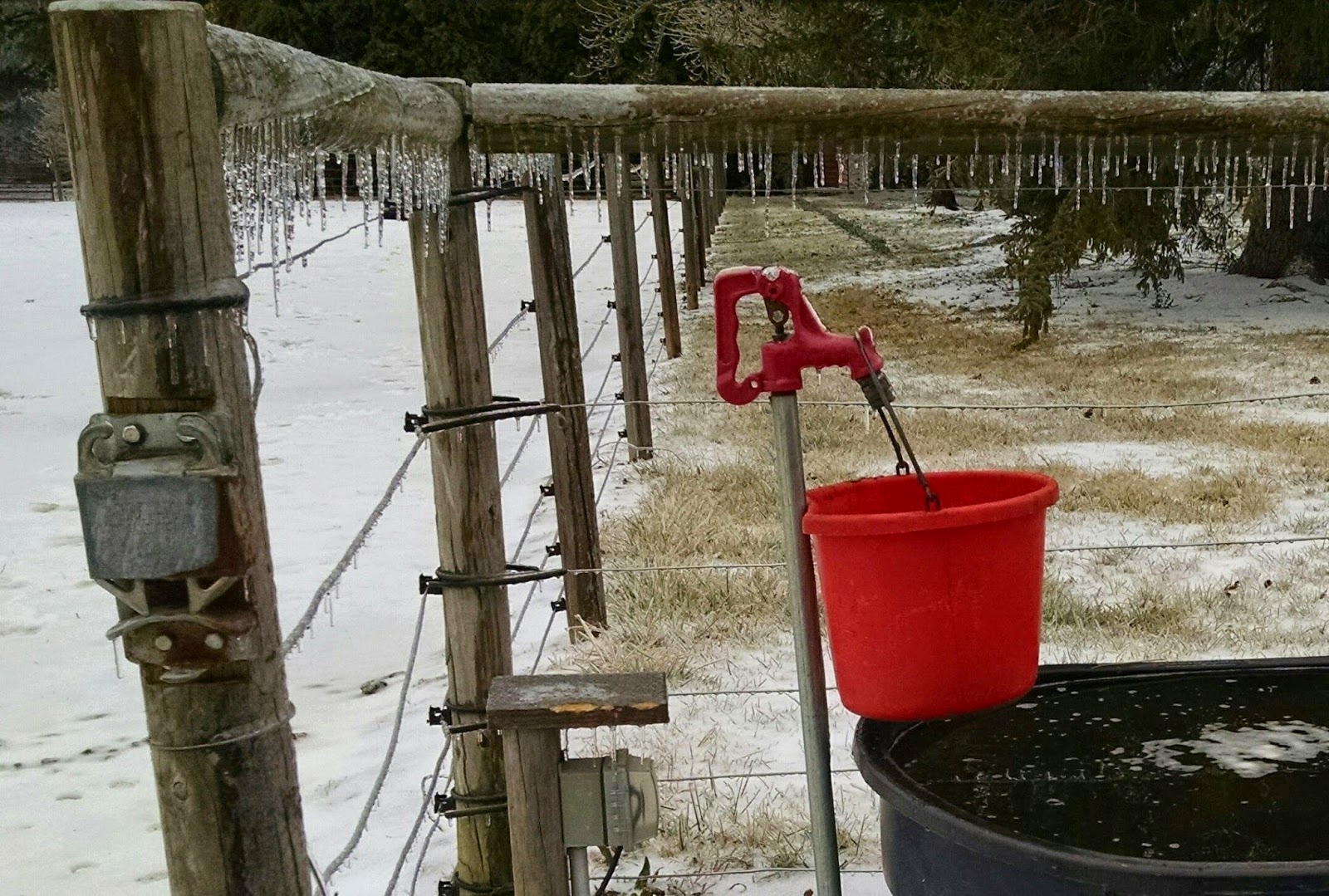
February has been a wintery month for us and one where I have been immensely grateful for large amount of high-quality hay that we put up for the season. I am also thankful for heated water tanks, frost-free faucets, and waterlines buried deep in the soil. Even with multiple days below 10 degrees, we had water flowing at all the outside faucets.
Our animals have all come through the high winds, single digit temperatures, and snowy days without issue. They all have thick, fluffy winter coats and good shelters to get out of the wind. With the windward side doors closed, the barn is a cozy place. When we check on the animals late at night, we often find the horse and both donkeys curled up in the barn together. Sweet. The donkeys don't care for snow very much, but after awhile they did wander out in it.
The snow is pretty This was a very early morning shot from earlier this week. We were expecting a dusting overnight and woke up to about five inches. We have been fortunate to have power and water throughout these storms and all family members manuvered their cars and trucks safely across the roads. We did have two trees fall on fences in the cattle pastures. Just discovered one today. But that is a minor inconvenience (says the person who does not have to repair the fencing!).
Inside we are all cozy and warm. The woodstove has been a blessing with the very cold temperatures. I still don't want to see the oil bill, but I know that without the woodstove it would be worse. Sitting in front of a roaring fire, we are planning for the spring planting season and trying to decide which crops to concentrate on for the 2015 growing season. The garlic looks like it came through the very cold temperatures just fine. Potatoes, a variety of winter squash, popcorn, and kohlrabi are on my list as commercial crops. Of course we will grow all the standard vegetables for the family including tomatoes, peppers, eggplant, snow peas, beans, summer squash, green onions, and broccoli.
So here is to the coming of spring. The early signs are there. The daffodils are poking through the snow and the dog is shedding like crazy! I hope my next farm post will have pictures of green grass, crocus blooms, and sunshine.
Sunday, December 4, 2011

Winterizing the Chicken Tractor

Chicken coop, barn, and portable fencing (for rotational grazing). 
Note the shade cloth on the chicken coop run.

Many people started raising a few chickens in chicken tractors (portable coops) this year.  We had quite a few of them stop by and take pictures of our portable coop and use those as a basis for coming up with their own designs (that were hopefully much lighter than the one we built!).  Now we are getting questions about how to get chickens through the winter without them freezing. Chickens are pretty hardy, especially most of the heritage breeds that people are choosing to raise this way, but there are things you can to to help ensure that your birds remain safe, healthy, and comfortable this winter.
  1. They should have a draft-free coop.  Not air-tight, because they need ventilation, but not drafty.  Our coop has louvered doors next to the nests and two vents, one at the top and one at the bottom of the coop.  When the weather gets below about 25 degrees F, we have cardboard inserts that we install to cover the louvres and an aluminum sliding door that we slide in to cover the upper vent.  The birds huddle together and stay quite toasty.  The coop actually feels warm when I open it in the morning and the birds appeared quite comfortable even when outside temperatures got down into the single digits.
  2. Make sure the coop is dry.  Be diligent about checking nests and bedding to make sure they are dry.  We line our nests with hay and I clean the nests daily to make sure they aren't damp.
  3. Make sure they have free flowing water.  This is a real problem for some people and I hear stories of taking fresh water to their birds several times a day or building all kinds of insulated water holders.  We bring the plastic waterer in every night and refill it and replace it each morning.  But because of our "greenhouse run", the water does not freeze during the day.  Never has.
  4. What is a "greenhouse run"?  See the pictures below.  We have a standard A-frame run, but we cover ours with greenhouse grade plastic and it has "wings" on both sides that can be raised or lowered for protection from wind and rain and for ventilation.  During the summer we usually keep one side down and have a piece of shade cloth on that side to provide shade (see picture at top of post).  When it is brutally hot and humid, we raise both sides.  In the winter we usually keep both sides down all the time.  Solar heating keeps the run comfortably warm and dry and protects the birds from the wind.  Throughout most of the winter, the end door is open to the annex (see the photos) so they can get fresh air and sunshine.  When it is REALLY nasty out, we keep the end door shut.
  5. Make sure they have plenty of high energy feed.  Our birds are on fresh ground everyday because we move the coop every morning.  They get scraps from our kitchen and garden and have access to commercial crumble, too.  But when it is really, really cold and nasty out, we also give them a dish of scratch and a morning bowl of hot oatmeal.  Oh, they love the oatmeal.  I know.  That is really spoiling them and they probably don't need it, but they sure do love it! 
And that's how we get our hens through the winter. They appear comfortable and it requires minimal effort on our part.  Below are pictures I took right after we put fresh plastic on the run last weekend.  We used a four year, polyethylene greenhouse film which should give us many years of service.  Note the aluminum flashing on the peak.  We've learned that is a wear point for our system; the first place the plastic starts breaking down, so we covered it with the flashing this time. When we "raise the wings" the hinge is that horizontal wood strip you see running across the center of the side. It folds up and is held in place with a short bungee cord.